Helping new graduates build financial confidence
Overview
Designed for the 79% of Gen Z who feel anxious about investing
My Contributions
Conducted user interviews and led usability testing. Designed user flows, wireframes, and prototypes for the Learning Hub experience.
Team
4 designers
Tools
Figma, Figjam, Canva
Type
Self-initiated
0 → 1 Concept
Year
2024 (3 months)

"Yay, I graduated! 🎉 Earning my first paycheck feels amazing, until I realize... how do I manage my money now?!"
Thats great! Life is giving you lemons…
make lemonade!
Context
Gen Z adults began investing at age 19 on average. This is significantly younger than Baby Boomers who began at an average age of 35 and Millennials at 25.
However… despite students and young adults investing at an all time high 📈 basic financial literacy remains globally low 📉
Solution
LemonWise is an app that helps new-grads find non-intimidating ways to invest early on, so they can build financial literacy and nurture healthy money habits for long-term success.
Research Process
Interview Insights
Exploring the financial habits of new-grads
To confirm whether the problem was common, I interviewed 8 new-grads (aged 21-25) and found that...
⭐ AI helped explore alternative ways to phrase interview questions to reduce ambiguity and bias.
6/8 reported challenges in maintaining tracking, which led them to abandon budgeting practices
6/8 are interested in investing but have no idea how
5/8 mentioned a desire for better data visualization
New-grads are saying…
“If there's a really clear document that explains things really well or suggestions on where to start, I would start investing.”
“I think I would need financial education to help me set realistic financial goals.”
Competitive Analysis
Assessing financial apps for gaps and opportunities
While many of the financial apps we explored were well-made (e.g. YNAB and Buddy), we discovered several opportunities to incorporate unique features into our product that would distinguish it from the competition using user research.
Gaps
Helpful financial analytics
Security concerns
Lack of educational features
Opportunities
Design for low-learning curve
Seamless transition towards investing
Monitor finances through visualization
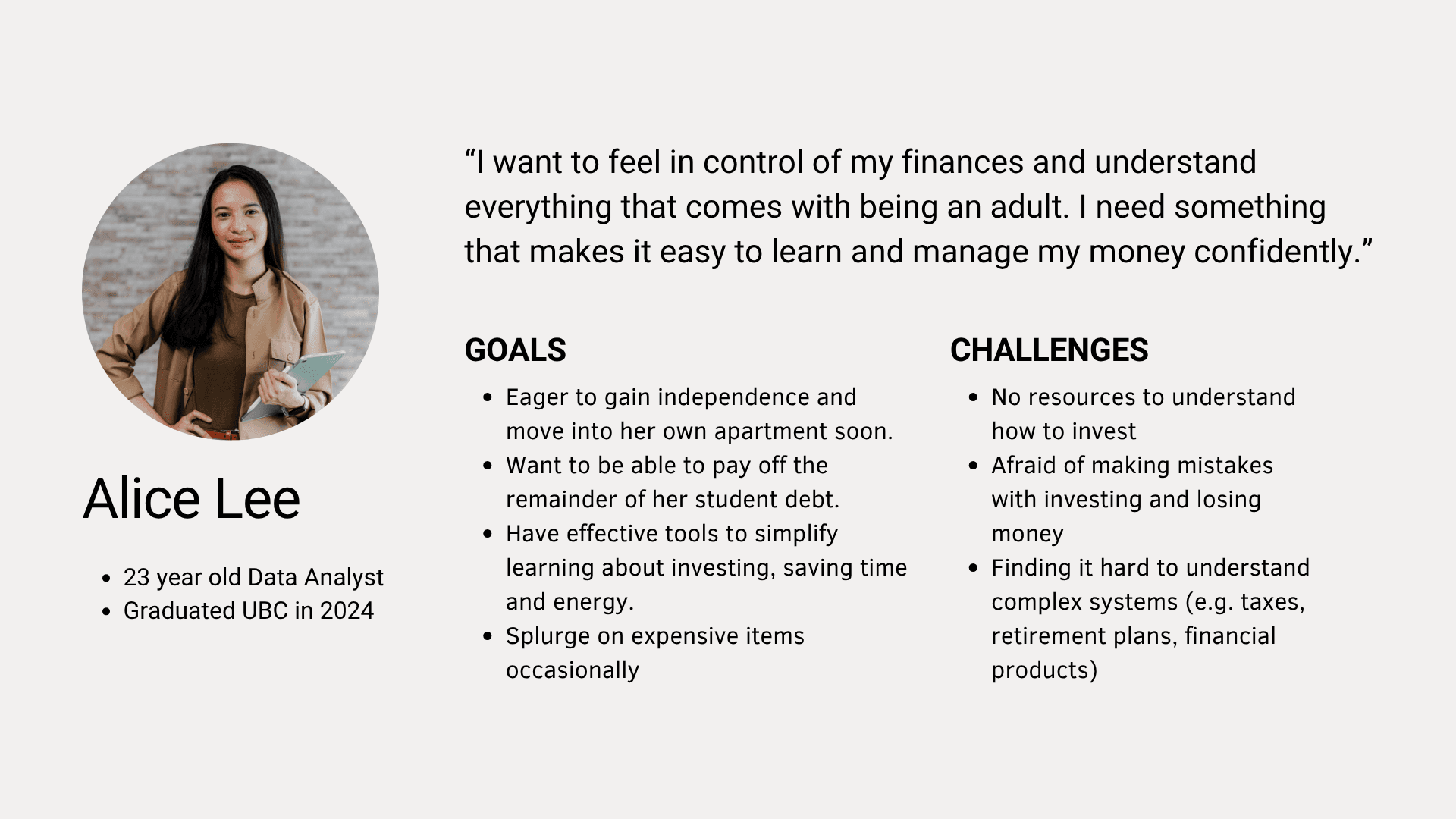
Persona
Empathizing with users to address goals and pain points
Focusing on new-grads and their transition into financial independence provided a clearer understanding of the target audience.
Prioritization Matrix
Ranking features for impactful design
After compiling user feedback based on the most frequently mentioned responses, I prioritized features using a 'Priority x Feasibility' framework. This allowed me to focus on features that were both highly requested and practical to implement.
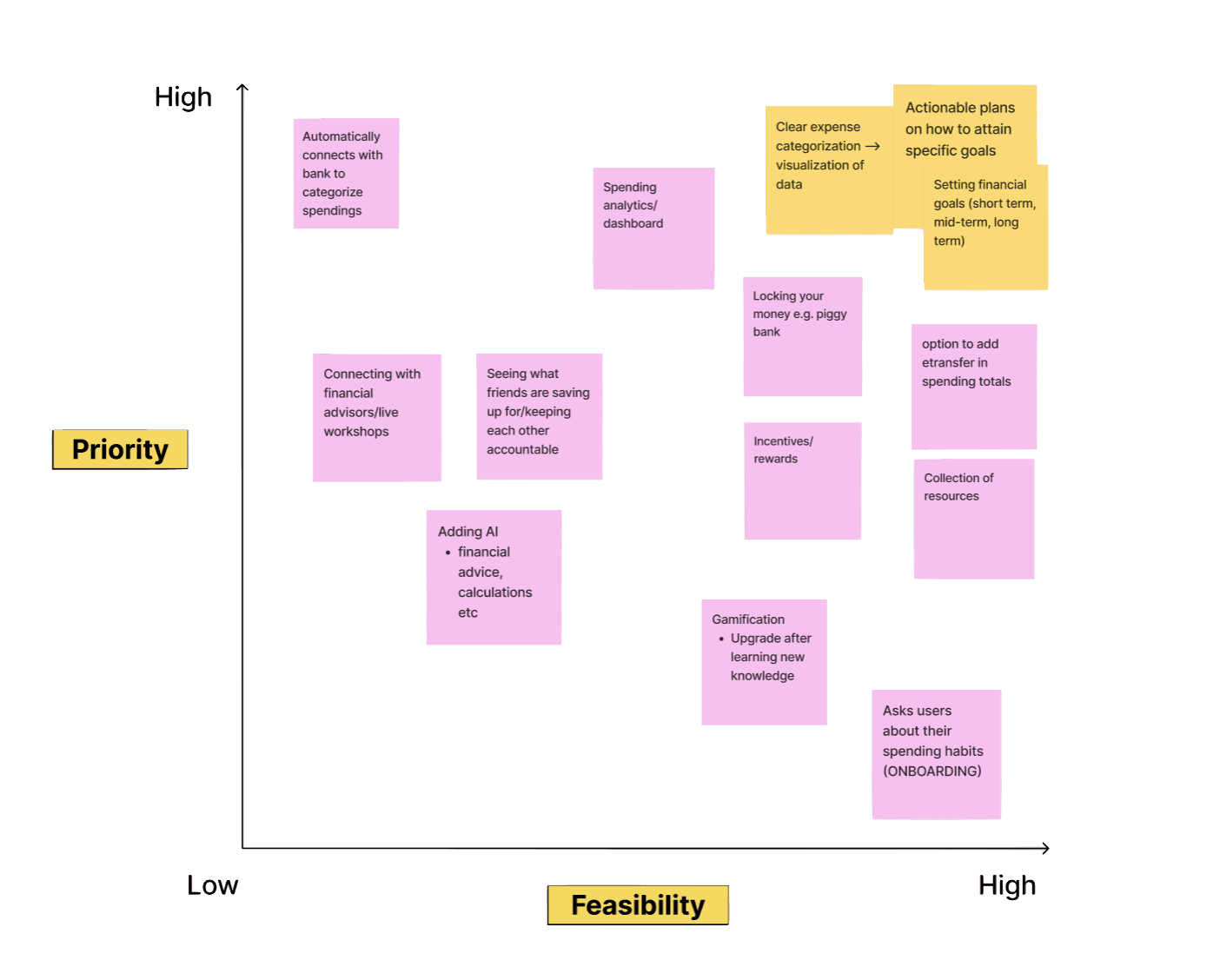
Top 3 features
Setting a financial goal
Actionable plans for investing
Clear visualization of spending data
Gathering Persona + Research Insights
Alice wants to….
See a visualization of her spendings without feeling stressed
Still travel and splurge on expensive items
Invest but don’t know where to start
Become more confident in her financial decisions
Solution Phase
Ideation
The four pillars
Using the user persona and research insights, we came up with 4 features to address the 4 identified pain points.
Spending Analytics
Visualizes spending analytics in real-time for users to understand their habits
Goal-setting
Allows users to set financial goals in clear categories with consideration to timing
🚀 Investment Integration
Unique feature: Users can allocate a portion of their goal-based savings to investments, enabling them to take gradual, actionable steps into investing.
Learning Hub
Give users opportunity to learn including videos, articles, and interactive quizzes
Low-Fidelity Prototype
Translating insights into wireframes
After some UI sketches, I created low-fidelity wireframes to map the user journey for returning users. Each screen displays a screen that represents each pillar.

Usability Testing
Testing the primary flow of setting up a financial goal
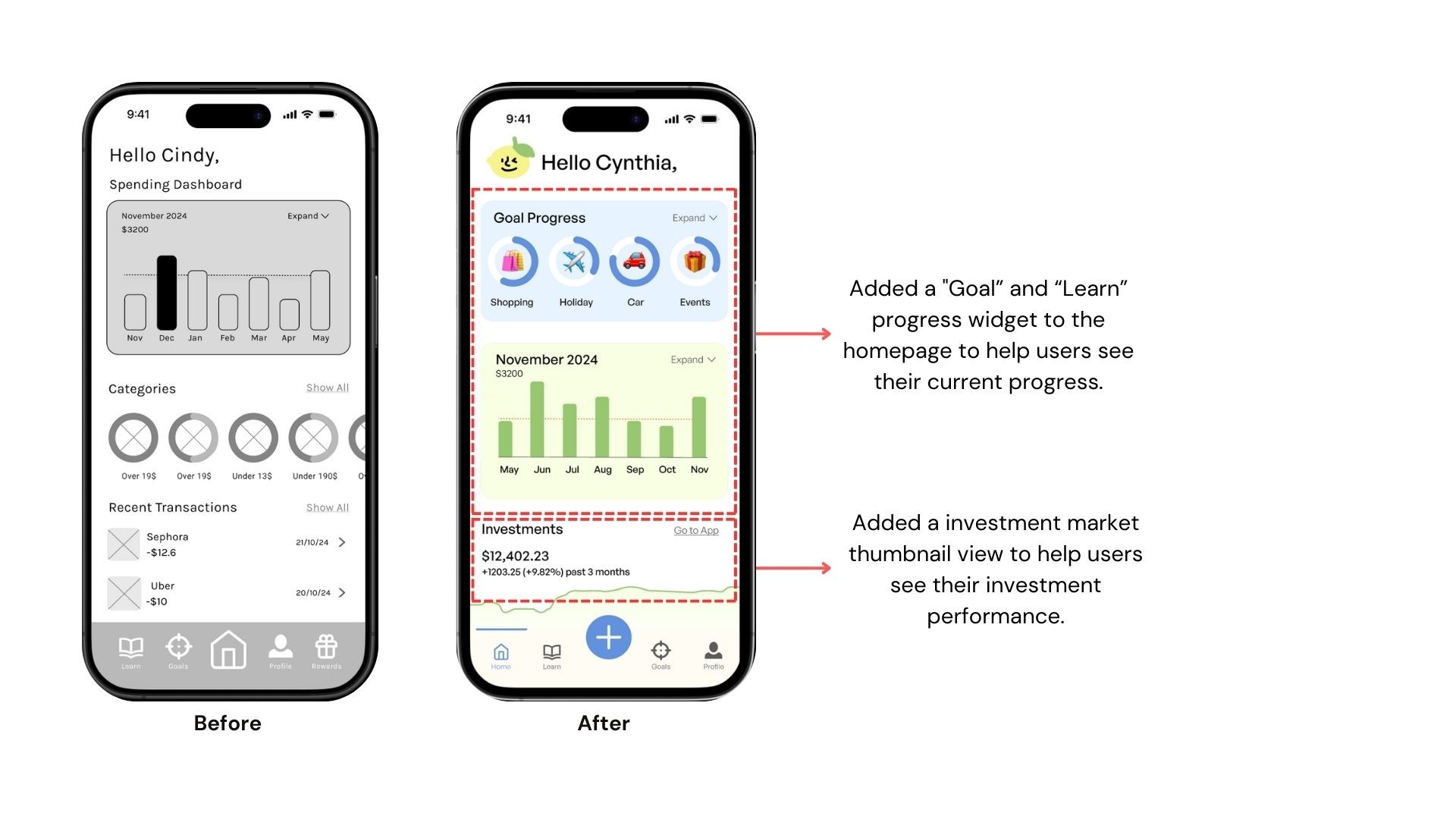
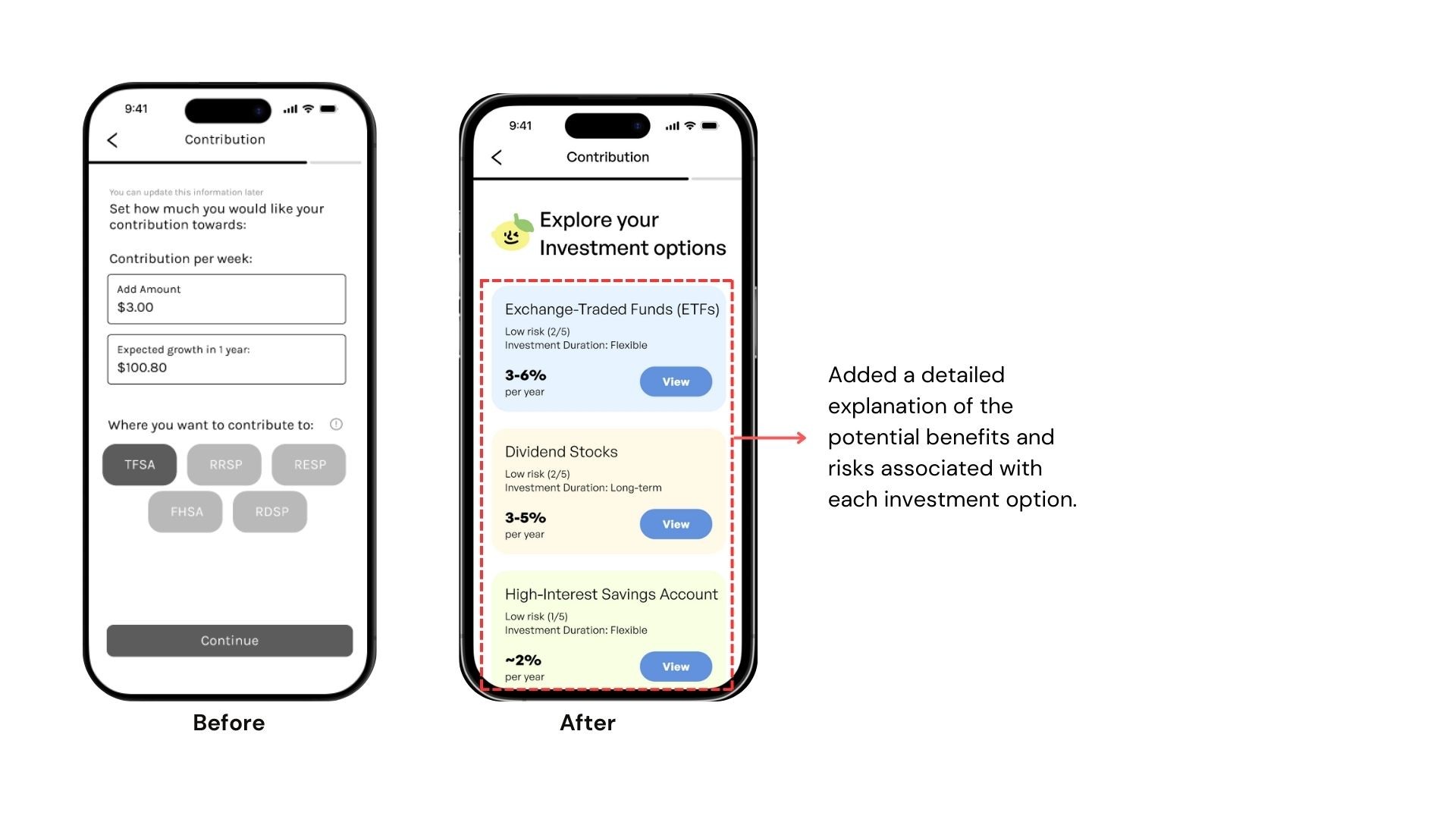
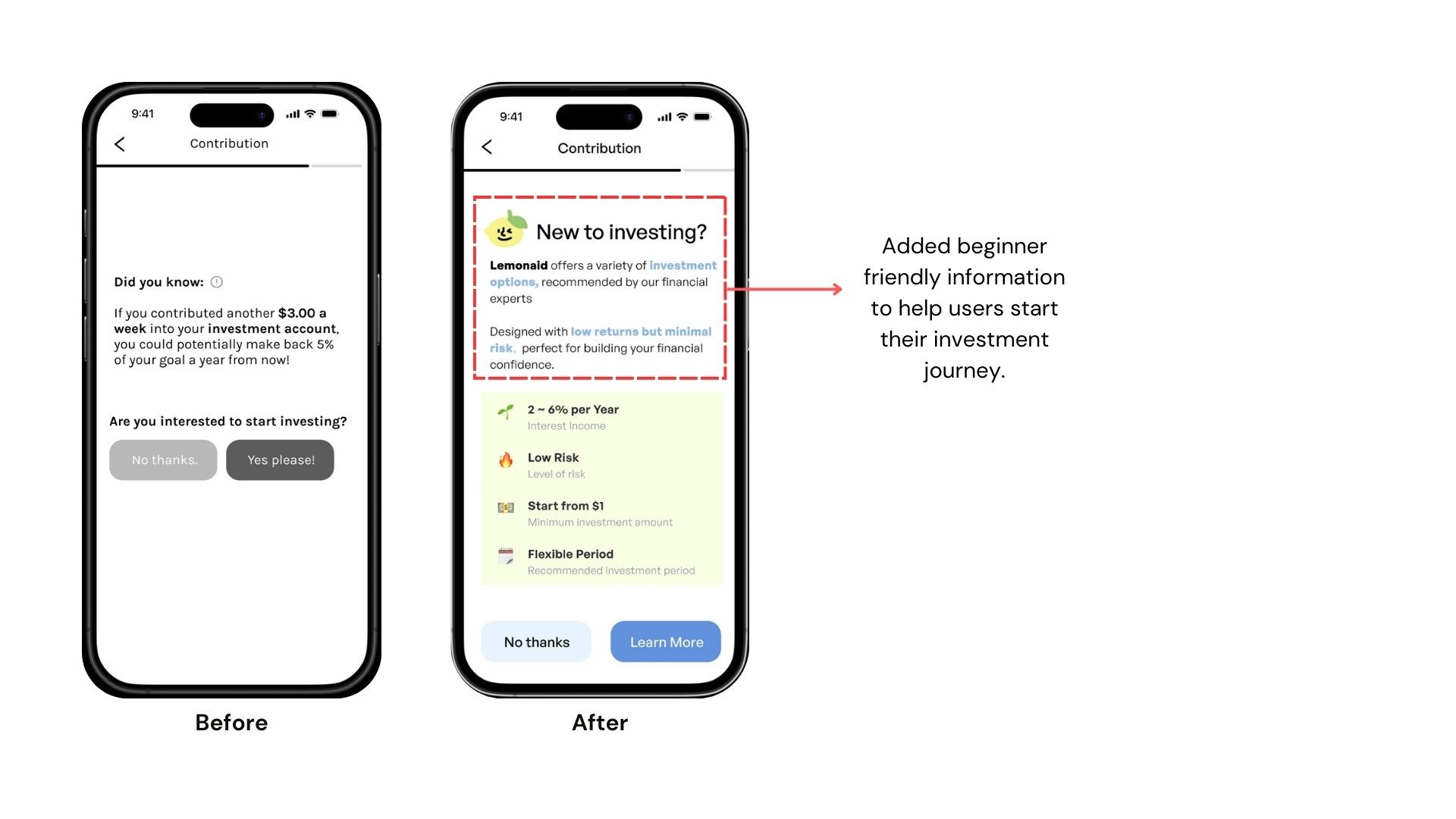
I conducted a "think-aloud" session and follow-up interview with 6 users, revealing 6 key themes that guided iterations on our high-fidelity prototype.
⭐ AI helped cluster similar observations during early affinity mapping, which I then refined manually.

Example iterations ↓
Visual Design
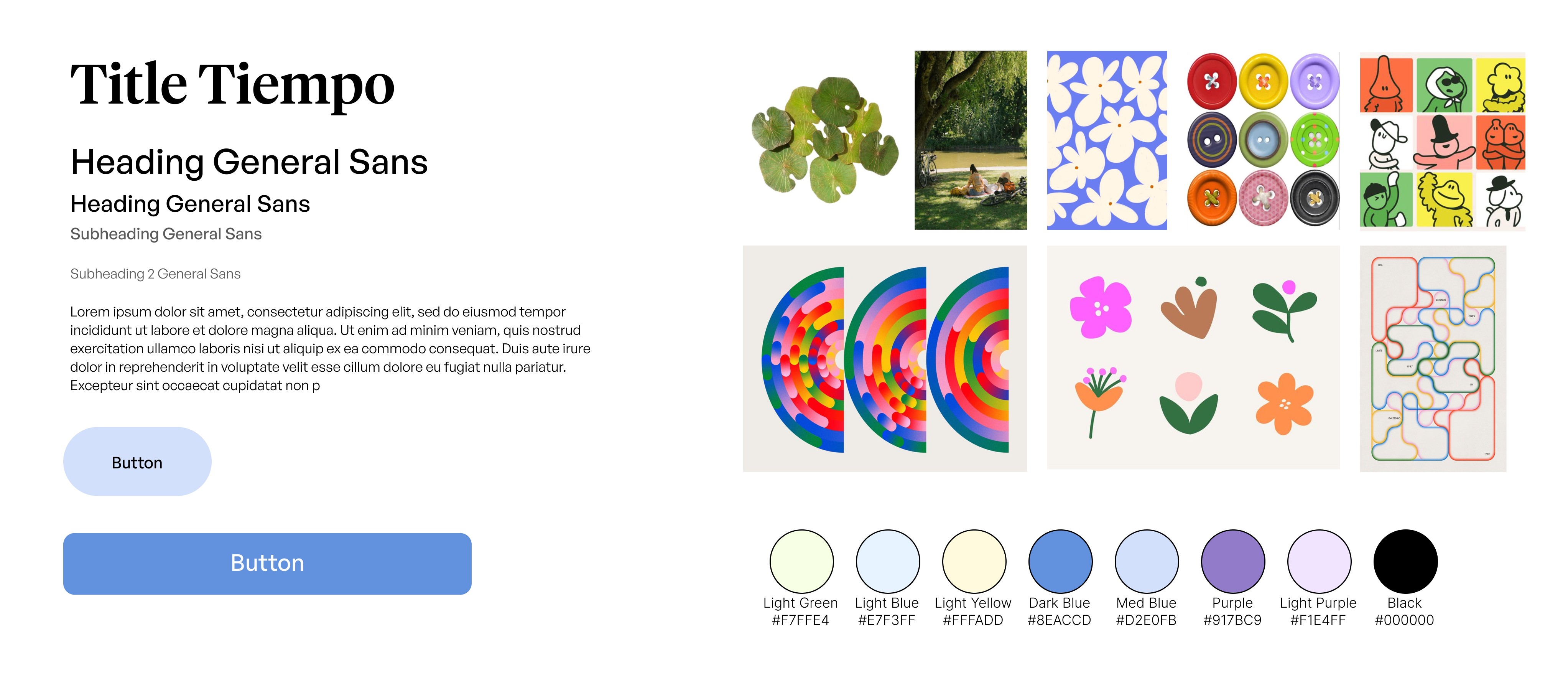
Friendly, Modern, Playful
The design uses bright and vibrant colors, paired with bold, modern typography and playful illustrations, including lemons and cheerful emojis, to create an engaging and approachable aesthetic.
High Fidelity Mockups
Four pillars overview

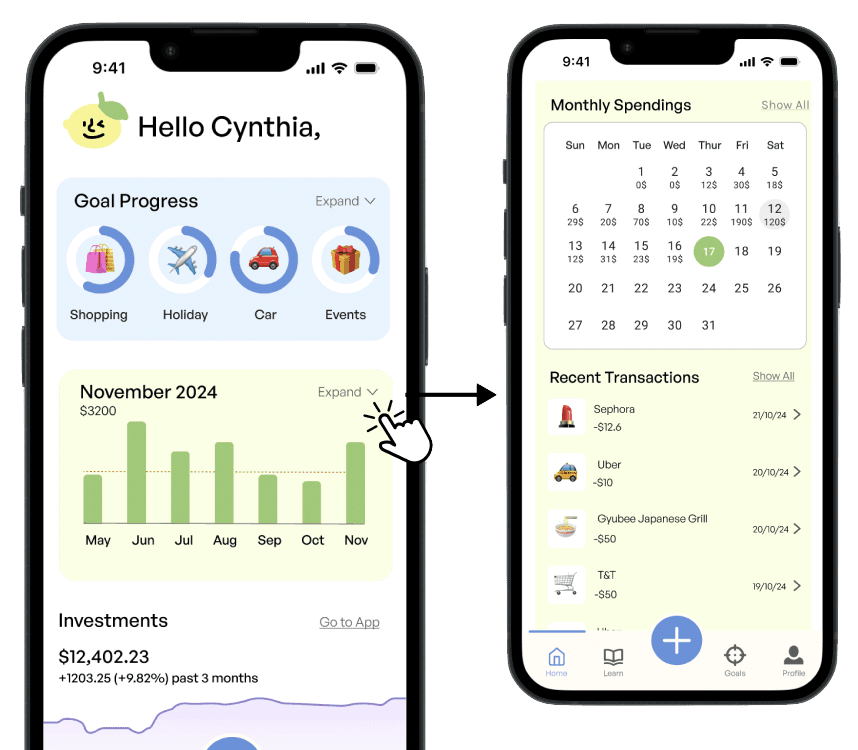
Homepage
A one-stop-shop for all financial overviews using widget based summaries. Each section can be clicked on to redirect them to a more extensive section.

Pillar 1: Spending Analytics
Spending patterns and analytics are designed to be non-threatening and easy to understand.
Pillar 2: Goal Setting
Users are guided through an intuitive onboarding process to set long-term or short-term goals effortlessly.

Pillar 3: Investment Integration
Rather than assuming users understand investment terms and setup, consistent onboarding is provided for all users. Product tours and tooltips highlight unfamiliar terms and features.

Pillar 4: Learning Hub
Modules that adapt and grow in complexity as users enhance their financial literacy to ensure continuous learning.

Lessons Learned
Designing a unique fintech feature in a crowded, security-conscious market required constant iteration and teamwork. This experience reinforced the value of collaboration, adaptability, and clear decision-making when navigating ambiguity.
Simple beats flashy
During ideation, we explored concepts such as social investing and gamification, but we ended up prioritizing features that directly addressed user needs. The experience reinforced that clear, focused solutions often create more value than adding unnecessary complexity.